
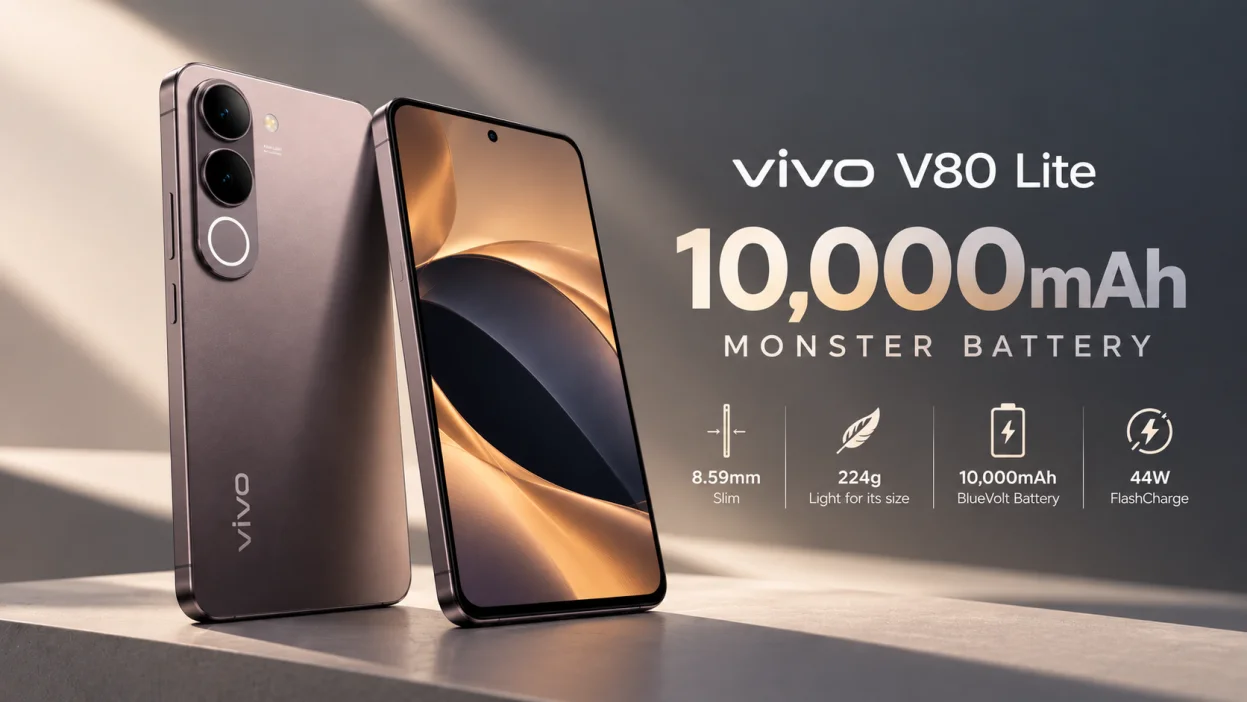
For years, getting dramatically longer battery life meant accepting a thicker and heavier phone. The Vivo V80 Lite 5G challenges that old tradeoff by fitting a 10,000mAh battery into an 8.59mm body weighing 224g. That is the largest battery capacity vivo has offered globally, yet the phone still has the dimensions of a fairly normal large smartphone. This matters beyond one vivo model. If capacities once associated with rugged battery phones can now fit into mainstream designs, battery life could become less about carefully stretching a phone through one day and more about simply using it without thinking about the charger.
The technology making this possible is vivo's fourth-generation Silicon Anode Technology inside its BlueVolt battery. Silicon-based anodes allow more energy to be stored within a limited battery volume, which is why capacity can rise without phone thickness increasing at the same rate. vivo also uses a semi-solid electrolyte, designed to keep supplying power from as low as minus 30°C up to 45°C. The 10,000mAh figure is the typical capacity, with a 9,800mAh rated capacity, and the phone supports 44W FlashCharge. vivo also says the battery is engineered to retain at least 80% of its original capacity after 1,400 full charging cycles. Its claim of roughly seven years is based on a laboratory usage model, so it should not be treated as a guarantee for every owner. And vivo is not alone in pushing this direction, HONOR's Power2 already uses a 10,080mAh silicon-carbon battery while measuring only 7.98mm thick, showing that higher-density batteries are becoming a wider smartphone trend rather than a one-off experiment.
The bigger change is what a battery this large could do to how you use a phone during the day. Instead of leaving home and immediately thinking about brightness, battery saver or where you can plug in later, there is much more room for navigation, video calls, gaming, photography and hours of 5G use. That becomes especially useful when your phone is also your laptop's mobile hotspot at a café or while travelling. In vivo's controlled testing, eight hours of hotspot sharing consumed 14%, while a 12-hour intensive-use test that included photography, video recording, calls, Zoom, navigation, office apps, TikTok, gaming and music ended with 33% battery remaining. Separate laboratory tests reached 30 hours of video streaming, 30 hours of TikTok playback, 14 hours of MLBB and 68 hours of calls. Real results will vary, but this is the kind of capacity that could mean using your phone heavily all day and still having enough left for Maps, messaging or booking a ride home at night. The V80 Lite can also reverse-charge compatible USB-C devices, giving that extra capacity another use when earbuds or another phone need power.
That is why the V80 Lite is more interesting than simply being another phone with a bigger battery. The important change is that battery capacity is increasing without phone size increasing at the same pace. Manufacturers can use that improvement to build 10,000mAh phones that last much longer, or spend the same battery-density gains on making future phones thinner and lighter while keeping familiar capacities. There are still compromises, including the V80 Lite's 224g weight and the time required to refill such a large battery at 44W, but the direction is clear. If 8,000mAh to 10,000mAh batteries become normal in mainstream phones, carrying a power bank, hunting for café outlets, rationing hotspot use and worrying about whether your phone will survive the trip home could become much less common. The real breakthrough is not simply more hours of battery life, but needing to think about battery life less often in the first place.
Vivo V80 Lite Packs a Monster 10,000mAh Battery Into a Slim Body
YOU MAY ALSO LIKE THESE ARTICLES
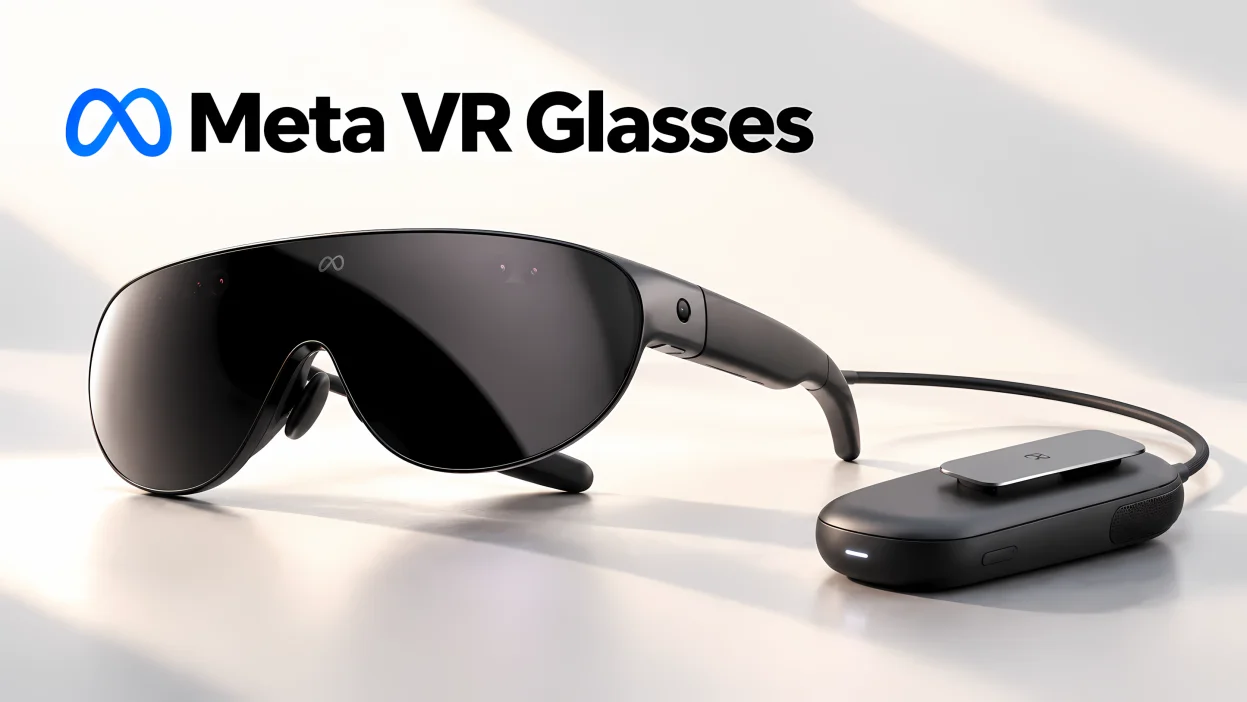
Meta VR Glasses Bring Immersive VR Down to Just 100g
Meta's new VR Glasses put only 100g on your face, using a separate compute puck to make immersive work, movies and gaming more wearable.

Ray-Ban Meta Gen 3 Review Meta Made AI Glasses Easier to Live With
Ray-Ban Meta Gen 3 gets a slimmer design, more frame styles, prescription options, better microphones, longer battery life and Muse support on the way.
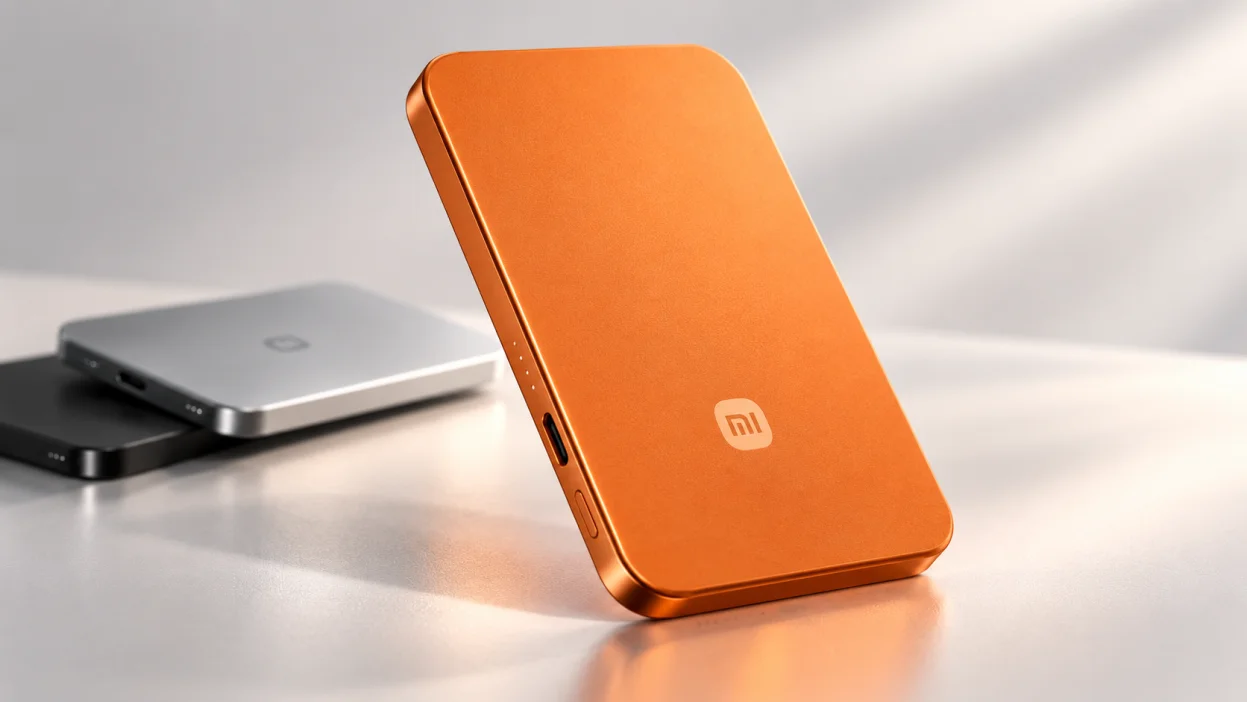
Xiaomi UltraThin Magnetic Power Bank Packs 5000mAh Into Just 6mm
Xiaomi packs 5000mAh into a magnetic power bank just 6mm thin. We look at how it feels in daily use, how much charge it can deliver, and whether the slim design is worth carrying.
How Apple Silicon Is Building the Future of Local AI
How far Apple can push AI onto iPhone, iPad and Mac as unified memory, Neural Engine and models like AFM, Llama, Qwen and Gemma bring more intelligence on-device