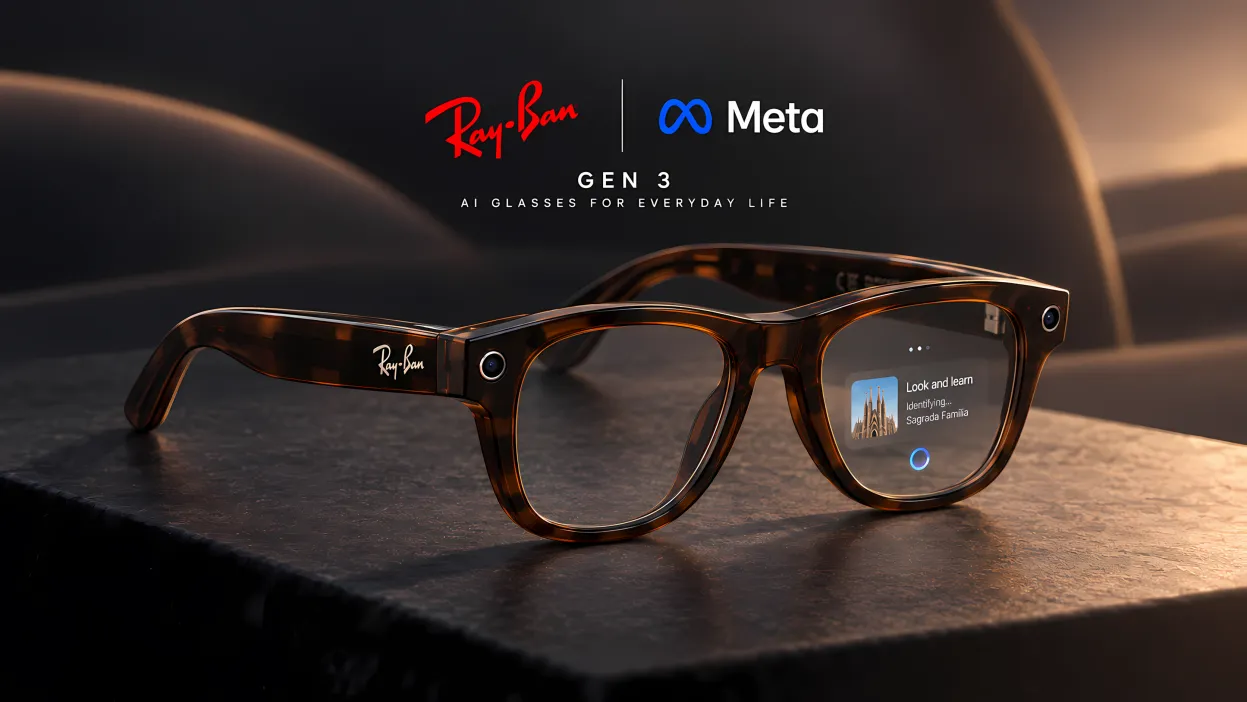
Meta's third generation Ray-Ban glasses are built around a simple idea, make smart glasses feel more like something you would naturally wear every day. Ray-Ban Meta Gen 3 has a slimmer frame, professionally adjustable temple tips, a customizable action button, up to nine hours of battery life, six microphones, a 12MP camera and 3K video recording. The new button can also be assigned to Meta AI, so you can reach the assistant without always starting with a voice command. The bigger change is not that the glasses suddenly look more futuristic, but that Meta is fitting more technology into something that looks increasingly like normal eyewear
That matters because design is a big part of whether smart glasses are actually wearable. Gen 3 comes in Wayfarer, Aviator and Zena, with 27 frame and lens combinations. Wayfarer keeps the familiar square Ray-Ban shape, Aviator brings one of the brand's most recognizable designs into the smart glasses line, while Zena offers a more fashion-focused cat-eye style. Ray-Ban also says the combined camera and LED opening is 36% smaller than before, which helps the hardware blend into the frame. Prescription support is also available, including options for nearsightedness, farsightedness and astigmatism, with single vision and progressive lenses depending on the frame, prescription and region. That means these can function as your everyday corrective glasses instead of being something you wear only for the smart features.
The smaller camera opening does bring the privacy question back. The 12MP camera remains in the front corner of the frame, while a white capture LED on the opposite side tells people nearby when a photo or video is being taken. Meta says the light cannot simply be switched off, and covering it disables the camera. The company has also worked on detecting attempts to physically modify or destroy the LED. Those safeguards do not completely solve the social side of wearable cameras, especially now that the hardware is becoming less obvious, but they do show that Meta is treating the recording indicator as a required part of the experience rather than something users can bypass.
The more important change may be what the glasses can do once you start talking to them. Gen 3 still includes Meta AI for asking questions, identifying what you are looking at, messaging, calling and live translation, but Meta has also announced that its new Muse personal AI agent is coming to AI glasses. Muse is designed to handle longer tasks rather than only answering single questions. Meta says it can use connected services, send emails, help book travel, fill out forms and continue working until it needs your input or approval. On glasses, that could make AI feel more useful because it is available while you are walking, looking at something or using your hands for something else. It is important to note that Muse has been announced for the glasses platform, but not every Muse capability is already available on Ray-Ban Meta Gen 3 today.
The hardware is also being improved around those hands-free interactions. Gen 3 uses a six-microphone array, and Meta claims it can reduce more than 90% of background noise for clearer calls and voice commands. The 12MP camera now records 3K Ultra HD video, while Dynamic Photos can help choose a better frame from a captured moment. Meta is also planning Dolby Atmos video capture with 360-degree spatial sound for its AI glasses. Battery life increases to up to nine hours, giving the glasses more time to handle music, calls, photos, video and AI during a normal day. The useful question is not whether any one of these upgrades is dramatic on its own, but whether together they let you keep your phone in your pocket more often.
That is probably the best way to look at Ray-Ban Meta Gen 3. Meta is making the technology less noticeable while asking the glasses to do more. The frame is slimmer, there are more styles, prescription lenses are supported, the camera opening is smaller, the microphones and battery have improved, and Muse could eventually make the AI much more capable than a simple voice assistant. The real test is whether these glasses are good enough that you would want to wear them even without the smart features, then keep using them because the technology inside actually makes everyday tasks easier.