
Vivo iQOO 16 VS Xiaomi 18 Pro Max
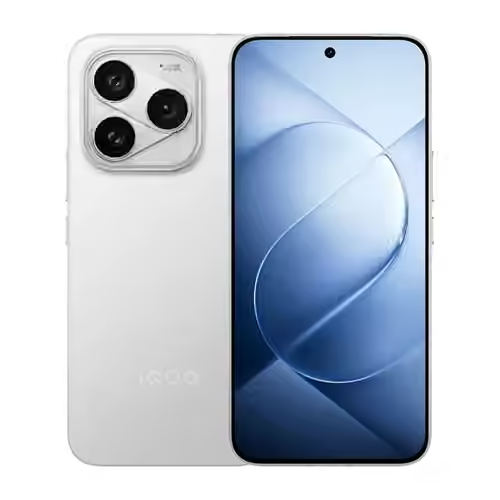
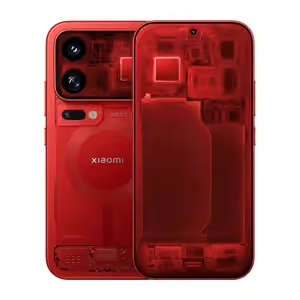
We are comparing the Vivo iQOO 16 (Vivo) with the Xiaomi 18 Pro Max (Xiaomi). Scroll down to the pros and cons of each phone, in-depth specs, and performance highlights.
Overall Comparison
KEY DIFFERENCES OF Vivo iQOO 16 AND Xiaomi 18 Pro Max
Here’s how Vivo iQOO 16 and Xiaomi 18 Pro Max stack up against each other in their most impactful areas.
Reasons to consider the Vivo iQOO 16
-
Superior display technology (LTPO AMOLED)
-
38% smoother display (165 Hz vs 120 Hz)
-
10% higher AnTuTu v11 score (5498720 vs 5001234)
-
Higher resolution (1440 x 3168)
-
2% lighter at 229.8g

Reasons to consider the Xiaomi 18 Pro Max
-
Higher Main Camera Resolution of 200 MP
-
1% larger battery (8500 mAh vs 8400 mAh)
-
Higher Selfie Camera Resolution of 50 MP
-
1% larger display (6.9 inches vs 6.85 inches)
SPECIFICATION TABLE COMPARISON OF Vivo iQOO 16 AND Xiaomi 18 Pro Max
Below is the detailed specification table comparing Vivo iQOO 16 and Xiaomi 18 Pro Max.
Note: Highlighted specs mean that Phone wins that spec row.
If neither side is highlighted, it is a tie or there is not enough data for both specs.
| Specification | Vivo iQOO 16 | Xiaomi 18 Pro Max |
|---|---|---|
|
General Information
|
||
| Brand: | Vivo | Xiaomi |
| Release Date: | September 29, 2026 | September 23, 2026 |
| Mobile Chipset: | Snapdragon 8 Elite Extreme Gen 6 | Snapdragon 8 Elite Extreme Gen 6 |
| GPU: | Adreno 850 | Adreno 850 |
| Operating System: | Android 17 | Android 17 |
| Weight: | 222.5 g, 227.9 g, 229.8 g (by finish) | 235 g |
|
Display
|
||
| Display Size: | 6.85 inches | 6.9 inches |
| Display Resolution: | 1440 x 3168 | 1208 x 2624 pixels |
| Display Pixels Per Inch: | 508 | 418 |
| Display Technology: | LTPO AMOLED | AMOLED |
| Display Refresh Rate: | 165 | 120 |
| Display Brightness: | 1100 nits | 1200 nits |
|
Camera
|
||
| Main Camera Setup: | Triple Camera | Triple Camera |
| Main Camera: | 50 MP | 200 MP |
| Main Camera Features: | Dual-LED flash, HDR, panorama, Pro mode, RAW support | Dual LED flash, Bokeh mode, Pro mode, RAW support |
| Main Camera Video: | 8K at 30 fps, 4K at 30/60 fps, 1080p at 30/60/240 fps | 8K@30fps, 4K@120fps, 1080p@60fps |
| Selfie Camera: | 32 MP | 50 MP |
| Selfie Camera Video: | 4K at 60 fps | 4K@60fps |
|
Standard Lens
|
||
| Megapixels | 50 MP | 200 |
| Image Resolution | 8192 x 6144 | — |
| Aperture | f/1.68 | f/1.7 |
| Focal Length | — | 23 mm |
| Sensor | OmniVision OV50Q | — |
| Sensor Size | 1/1.3" | 1/1.28" |
| Pixel Size | — | 0.61 micron |
| Autofocus | PDAF | Laser AF |
| Stabilization | OIS | OIS |
|
Telephoto Lens
|
||
| Megapixels | 50 MP | 200 |
| Aperture | f/2.65 | f/2.4 |
| Focal Length | 85 mm | 75 mm |
| Sensor | Sony LYT-600 | Samsung ISOCELL HP5 |
| Sensor Size | 1/1.95" | 1/1.56" |
| Pixel Size | 0.8 micron | 0.8 micron |
| Autofocus | PDAF | — |
| Stabilization | OIS | OIS |
|
Ultra-wide Lens
|
||
| Megapixels | 50 MP | 50 |
| Aperture | f/2.05 | f/2.4 |
| Focal Length | 15 mm | 17 mm |
| Sensor | GalaxyCore GC50D1 | OmniVision OV50M40 |
| Sensor Size | 1/2.0" | 1/2.88" |
| Pixel Size | 0.64 micron | 0.61 micron |
| Stabilization | Digital | Digital |
|
Selfie Lens
|
||
| Megapixels | 32 MP | 50 |
| Image Resolution | 6528 x 4896 | 8192 x 6144 |
| Aperture | f/2.2 | f/2.2 |
| Focal Length | 21 mm | 21 mm |
| Sensor | GalaxyCore GC32E1 | OmniVision OV50M40 |
| Sensor Size | 1/3.1" | 1/2.88" |
| Pixel Size | 0.7 micron | 0.61 micron |
| Autofocus | No | PDAF |
| Stabilization | Digital | Digital |
|
Battery & Charging
|
||
| Battery Capacity: | 8400 mAh | 8500 mAh |
| Battery Type: | Si/C Li-Ion | Silicon-Carbon (Si/C) |
| Charging Speed: | 100W | 100W |
| Wireless Charging: |
|
|
|
Performance
|
||
| RAM: | 16 GB, 12 GB | 16 GB, 12 GB |
| Storage: | 1 TB, 512 GB, 256 GB | 1 TB, 512 GB, 256 GB |
|
GEEKBENCH V6
|
||
| Single-Core (V6) | 3764 | 3762 |
| Multi-Core (V6) | 11619 | 11459 |
|
ANTUTU SCORE
|
||
| Overall (AnTuTu V11) | 5498720 | 5001234 |
| CPU | 1512400 | 1431500 |
| GPU | 2045600 | 1947800 |
| MEM | 738900 | 500900 |
| UX | 1201820 | 1121034 |
| Overall (AnTuTu V10) | 5195978 | 5195978 |
| CPU | 1407243 | 1407243 |
| GPU | 1940214 | 1940214 |
| MEM | 739539 | 739539 |
| UX | 1108982 | 1108982 |
|
Connectivity
|
||
| Network Technology: | 5G | GSM / HSPA / LTE / 5G |
| SIM Type: | Dual Nano-SIM | Dual Nano-SIM |
| Wi-Fi: |
|
|
| Bluetooth: |
|
|
| GPS: |
|
|
| NFC: |
|
|
| USB: | USB Type-C 3.2 | USB Type-C 3.2 |
|
Extras & Build
|
||
| Fingerprint Sensor: |
|
|
| Fingerprint Sensor Type: | Under Display | Under Display |
| Face Recognition: |
|
—
|
| Water Resistance: |
|
|
| Speaker: | Stereo Speakers | Stereo Speakers |
| Audio Jack: | No | No |
Tip: ▲ indicates a higher-is-better spec advantage, while ▼ indicates a lower-is-better advantage.
PERFORMANCE CHART COMPARISON OF Vivo iQOO 16 AND Xiaomi 18 Pro Max
The charts below visualize how Vivo iQOO 16 and Xiaomi 18 Pro Max stack up in key performance metrics.
Radar Chart Comparison
Bullet Chart Comparison
SCREEN SIZE COMPARISON OF Vivo iQOO 16 AND Xiaomi 18 Pro Max
Here’s a proportional visualization of the Vivo iQOO 16’s 6.85 inches screen compared to the Xiaomi 18 Pro Max’s 6.9 inches display.
Vivo iQOO 16
6.85 inches″
Xiaomi 18 Pro Max
6.9 inches″
Value For Money Calculator
Prices use available launch or current data. Enter your own prices to see which phone gives better value.
Vivo iQOO 16
Xiaomi 18 Pro Max
Calculating...
Domain Score Summary
Scores are generated by Comparigon's scoring algorithm and are intended as a high-level guide. They may not map 1-to-1 with the individual spec-by-spec comparisons shown in the table.
Our Verdict
In conclusion, the Vivo iQOO 16 has a narrow overall lead compared to the Xiaomi 18 Pro Max. Its strongest advantages are in Camera and Display. They are still fairly close in Performance and Battery.
Try to Compare Again One of These Phones With Another Phone
Pick which phone to keep, then search for the other phone to compare.
Frequently Asked Questions about Vivo iQOO 16 vs Xiaomi 18 Pro Max
Vivo iQOO 16 scores 0.1% higher than Xiaomi 18 Pro Max in Geekbench 6 single-core (3,764 vs 3,762). Vivo iQOO 16 scores 1.4% higher than Xiaomi 18 Pro Max in Geekbench 6 multi-core (11,619 vs 11,459).
Vivo iQOO 16 scores 9.9% higher than Xiaomi 18 Pro Max in AnTuTu v11 (5,498,720 vs 5,001,234).
Both list Snapdragon 8 Elite Extreme Gen 6 for chipset.
Vivo iQOO 16 has a 6.85 inches display, while Xiaomi 18 Pro Max has a 6.9 inches display. Vivo iQOO 16 uses a LTPO AMOLED panel, while Xiaomi 18 Pro Max uses a AMOLED panel. Vivo iQOO 16 lists a 165 Hz refresh rate, while Xiaomi 18 Pro Max lists a 120 Hz refresh rate.
Both list Triple Camera for rear camera setup. Vivo iQOO 16 lists 50 MP for main camera, while Xiaomi 18 Pro Max lists 200 MP for main camera. Vivo iQOO 16 lists 32 MP for selfie camera, while Xiaomi 18 Pro Max lists 50 MP for selfie camera.
Xiaomi 18 Pro Max has 1.2% more battery capacity than Vivo iQOO 16 (8500 mAh vs 8400 mAh).
Vivo iQOO 16 and Xiaomi 18 Pro Max have the same listed wired charging power (100W vs 100W).
Both list 16 GB, 12 GB for RAM options. Both list 1 TB, 512 GB, 256 GB for storage options.
Both Vivo iQOO 16 and Xiaomi 18 Pro Max support wireless charging.
Vivo iQOO 16 was released on September 29, 2026. Xiaomi 18 Pro Max was released on September 23, 2026. Vivo iQOO 16 was released 6 days after Xiaomi 18 Pro Max.
Disclaimer: Specs, pricing, and benchmarks are sourced from official manufacturer data and verified test results. While we strive for precision, product details and pricing may change. Comparigon may earn an affiliate commission on qualifying purchases.