
Realme Narzo 80 Pro 5G VS Xiaomi Redmi Note 15 Pro 5G
We are comparing the Realme Narzo 80 Pro 5G (Realme) with the Xiaomi Redmi Note 15 Pro 5G (Xiaomi). Scroll down to the pros and cons of each phone, in-depth specs, and performance highlights.
Overall Comparison
KEY DIFFERENCES OF Realme Narzo 80 Pro 5G AND Xiaomi Redmi Note 15 Pro 5G
Here’s how Realme Narzo 80 Pro 5G and Xiaomi Redmi Note 15 Pro 5G stack up against each other in their most impactful areas.
Reasons to consider the Realme Narzo 80 Pro 5G
-
6% higher AnTuTu v11 score (985745 vs 927175)
-
50% more RAM (12GB vs 8GB)
-
100% more storage (256GB vs 128GB)
-
78% faster charging (80 W vs 45 W)
-
15% lighter at 179g

Reasons to consider the Xiaomi Redmi Note 15 Pro 5G
-
Higher Main Camera Resolution of 200 MP
-
10% larger battery (6580 mAh vs 6000 mAh)
-
18% higher single-core Geekbench score (1221 vs 1037)
-
Higher resolution (1280 x 2772)
-
Higher Selfie Camera Resolution of 20 MP
-
9% higher multi-core Geekbench score (3174 vs 2923)
-
Selfie video of 1080p at 60 fps
SPECIFICATION TABLE COMPARISON OF Realme Narzo 80 Pro 5G AND Xiaomi Redmi Note 15 Pro 5G
Below is the detailed specification table comparing Realme Narzo 80 Pro 5G and Xiaomi Redmi Note 15 Pro 5G.
Note: Highlighted specs mean that Phone wins that spec row.
If neither side is highlighted, it is a tie or there is not enough data for both specs.
| Specification | Realme Narzo 80 Pro 5G | Xiaomi Redmi Note 15 Pro 5G |
|---|---|---|
|
General Information
|
||
| Brand: | Realme | Xiaomi |
| Release Date: | April 9, 2025 | January 6, 2026 |
| Mobile SoC: | Dimensity 7400 | Snapdragon 8 Elite |
| GPU: | Arm Mali-G615 MC2 | Adreno 830 |
| Operating System: | Android 15 | Android 15 |
| Weight: | 179 g | 210 g |
|
Display
|
||
| Display Size: | 6.72 inches | 6.83 inches |
| Display Resolution: | 1080 x 2392 | 1280 x 2772 |
| Display Pixels Per Inch: | 391 | 447 |
| Display Technology: | OLED | AMOLED |
| Display Refresh Rate: | 120 | 120 |
| Display Brightness: | 1400 nits, 4500 nits (HDR) | — |
|
Camera
|
||
| Main Camera Setup: | Dual Camera | Dual Camera |
| Main Camera: | 50 MP | 200 MP |
| Main Camera Features: | LED flash, bokeh mode, pro mode | LED flash, bokeh mode, pro mode |
| Main Camera Video: | 1080p at 60 fps, 1080p slow motion at 120 fps | 4K at 30 fps, 1080p at 60 fps, 720p at 240 fps |
| Selfie Camera: | 16 MP | 20 MP |
| Selfie Camera Video: | 1080p at 30 fps | 1080p at 60 fps |
|
Standard Lens
|
||
| Megapixels | 50 MP | 200 MP |
| Image Resolution | 8192 x 6144 | — |
| Aperture | f/1.8 | f/2.2 |
| Focal Length | 26 mm | 25 mm |
| Sensor | Sony IMX882 | — |
| Sensor Size | 1/1.95" | 1/1.4" |
| Pixel Size | 0.8 micron | 0.7 micron |
| Autofocus | Phase Autofocus | Phase Autofocus |
| Stabilization | Optical | Optical |
|
Ultra-wide Lens
|
||
| Megapixels | — | 8 MP |
| Aperture | — | f/2.2 |
| Focal Length | — | 15 mm |
| Sensor Size | — | 1/4.0" |
| Pixel Size | — | 1.12 micron |
| Stabilization | — | Digital |
|
Selfie Lens
|
||
| Megapixels | 16 MP | 20 MP |
| Image Resolution | 4920 x 3264 | 5184 x 3888 |
| Aperture | f/2.4 | f/2.2 |
| Focal Length | — | 25 mm |
| Sensor | — | CMOS |
| Sensor Size | — | 1/4.0" |
| Pixel Size | — | 0.7 micron |
| Autofocus | No | No |
| Stabilization | Digital | Digital |
|
Battery & Charging
|
||
| Battery Capacity: | 6000 mAh | 6580 mAh |
| Battery Life (in hours tested): | 22 | 27 |
| Battery Type: | Silicon-Carbon (Si/C) | Si/C Li-Ion |
| Charging Speed: | 80W | 45W |
|
Performance
|
||
| RAM: | 12 GB, 8 GB | 8 GB |
| Storage: | 256 GB, 128 GB | 128 GB |
|
GEEKBENCH V6
|
||
| Single-Core (V6) | 1037 | 1221 |
| Multi-Core (V6) | 2923 | 3174 |
|
ANTUTU SCORE
|
||
| Overall (AnTuTu V11) | 985745 | 927175 |
| CPU | 339277 | 324188 |
| GPU | 148212 | 147261 |
| MEM | 221582 | 182022 |
| UX | 276674 | 273704 |
| Overall (AnTuTu V10) | 922227 | 2723036 |
| CPU | 329972 | 624873 |
| GPU | 147724 | 1217691 |
| MEM | 155228 | 449196 |
| UX | 289303 | 431276 |
|
Connectivity
|
||
| Network Technology: | 5G | 5G |
| SIM Type: | Dual Nano-SIM | Dual Nano-SIM + eSIM |
| Wi-Fi: |
|
|
| Bluetooth: |
|
|
| GPS: |
|
|
| USB: | USB Type-C 2.0 | USB Type-C 2.0 |
|
Extras & Build
|
||
| Fingerprint Sensor: |
|
|
| Fingerprint Sensor Type: | Under Display | Under Display |
| Water Resistance: |
|
|
| Speaker: | Stereo Speakers | Stereo Speakers |
| Audio Jack: | No | No |
Tip: ▲ indicates a higher-is-better spec advantage, while ▼ indicates a lower-is-better advantage.
PERFORMANCE CHART COMPARISON OF Realme Narzo 80 Pro 5G AND Xiaomi Redmi Note 15 Pro 5G
The charts below visualize how Realme Narzo 80 Pro 5G and Xiaomi Redmi Note 15 Pro 5G stack up in key performance metrics.
Radar Chart Comparison
Bullet Chart Comparison
SCREEN SIZE COMPARISON OF Realme Narzo 80 Pro 5G AND Xiaomi Redmi Note 15 Pro 5G
Here’s a proportional visualization of the Realme Narzo 80 Pro 5G’s 6.72 inches screen compared to the Xiaomi Redmi Note 15 Pro 5G’s 6.83 inches display.
Realme Narzo 80 Pro 5G
6.72 inches″
Xiaomi Redmi Note 15 Pro 5G
6.83 inches″
Release Timeline of Realme Narzo 80 Pro 5G and Xiaomi Redmi Note 15 Pro 5G
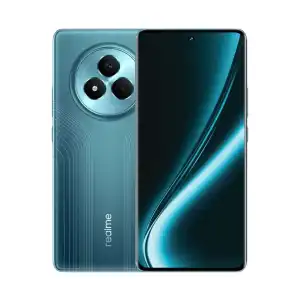
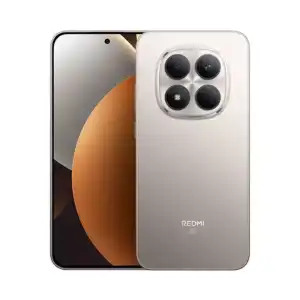
Realme Narzo 80 Pro 5G was released 8 months, 28 days earlier than Xiaomi Redmi Note 15 Pro 5G.
Value For Money Calculator
Prices use available launch or current data. Enter your own prices to see which phone gives better value.
Realme Narzo 80 Pro 5G
Xiaomi Redmi Note 15 Pro 5G
Calculating...
Domain Score Summary
Scores are generated by Comparigon's scoring algorithm and are intended as a high-level guide. They may not map 1-to-1 with the individual spec-by-spec comparisons shown in the table.
Our Verdict
In conclusion, the Xiaomi Redmi Note 15 Pro 5G has a narrow overall lead compared to the Realme Narzo 80 Pro 5G. It comes out ahead across every comparable key area.
Try to Compare Again One of These Phones With Another Phone
Pick which phone to keep, then search for the other phone to compare.
Disclaimer: Specs, pricing, and benchmarks are sourced from official manufacturer data and verified test results. While we strive for precision, product details and pricing may change. Comparigon may earn an affiliate commission on qualifying purchases.